


What ‘secure’ covers, and what it quietly leaves out
Casino footers love the word. ‘Secure payments’, ‘secure gaming’, ‘256-bit secure’. Most of those badges describe one narrow fact: traffic between your browser and the site is encrypted. That is worth having, and it is also the bare minimum that every online shop, bank and pizza delivery page has offered for years.
Security in the sense that matters to a player is broader. It asks four plain questions. Can a stranger get into my account? Can my deposit go missing between my bank and my balance? Are the pokies and tables running the maths they claim? And if the operator decides not to pay, is there anyone to complain to?
Notice what is not on that list. Secure does not mean you will win, and it does not mean the site is licensed in Australia. A site can have flawless encryption and still write terms that let it void a withdrawal on a technicality. Treat ‘secure’ as a set of checks you run, not a label you read.
| Layer | What can go wrong | What you can check yourself |
|---|---|---|
| Connection | Fake or mirror domain, intercepted login | Address bar, certificate, how you arrived at the page |
| Account | Someone else logs in and withdraws | Password rules, two-factor option, login history |
| Payments | Deposit not credited, payout redirected | Cashier methods, name matching, withdrawal rules |
| Games | Altered or unlicensed game copies | Provider names, game info screens, test certificates |
| Operator | Refused payout with no recourse | Company name, licence, terms, complaint route |
Layer one: the connection between your phone and the site
Start with the address bar. The address should begin with https and the browser should show its usual lock or tune icon without a warning. Tap it and you can see who the certificate was issued to and that it is still valid. If the browser throws a full-page warning about an invalid certificate, close the tab. No legitimate cashier asks you to click through one.
Encryption only protects you if you are talking to the right site in the first place. Offshore casinos change domains often, partly because the ACMA asks Australian internet providers to block sites that breach the Interactive Gambling Act 2001. That churn is a gift to scammers: a copy of the lobby on a look-alike address, promoted through a text message or a social media ad, collects logins and deposits that never reach a real balance.
Two habits deal with most of this. First, do not log in from a link in a message you were not expecting. Second, once you have a working address, bookmark it and use the bookmark. A real operator will also publish its current domain through its own support channel, and you can ask live chat to confirm it.
Apps and public Wi-Fi
Casino apps for offshore sites are rarely in the official stores. Usually what you are offered is a shortcut to the mobile site or an install file. A home-screen shortcut is harmless. An install file from an unknown page asks for far more trust, because it can request permissions a browser tab never gets. Our app page covers how that works for the brand this site follows. As for café or airport Wi-Fi: with https the content of your session is protected, but mobile data is still the cleaner choice for anything involving a cashier.
Layer two: the lock on your account
Most casino account thefts are not clever hacks. They are reused passwords. An email and password pair leaked from some unrelated site years ago gets tried, automatically, against hundreds of casino login pages. If you used the same pair, the door opens.
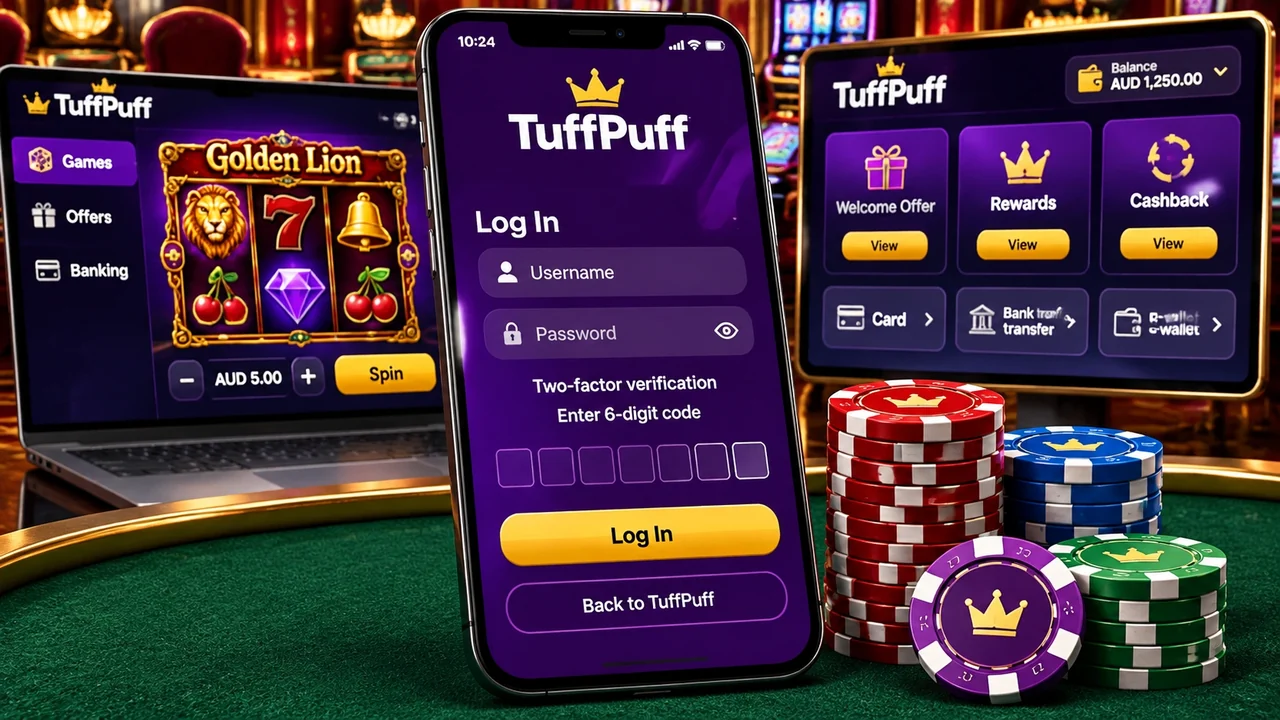
So the first test of a casino's account security is what it lets you do about that. Look in the profile or security settings for these:
- Two-factor authentication through an authenticator app, not only SMS. An app code survives a SIM swap, a text message does not.
- A login or session history showing device, time and rough location, with a button to end other sessions.
- Email or push alerts for a new device, a password change and a withdrawal request.
- A withdrawal lock, meaning a new payout method cannot be added and used in the same breath as a password reset.
A site that offers none of them is not automatically dishonest, but it is leaving the whole job to your password. In that case the password has to be long, unique and stored in a manager. Our guides on two-factor authentication and password security go through the setup step by step.
One more point people miss: the email account behind the casino login is the real master key. Whoever controls that inbox can reset everything else. Put two-factor on the email before you worry about the casino.
The conditions attached to promotions are covered in more depth in Bonuses Guide.
Layer three: the route your money takes
Payment security has two halves, and they fail in different ways. Deposits fail by going to the wrong place. Withdrawals fail by being sent to someone who is not you.
Deposits
Australian players mostly meet four options in an offshore cashier: PayID, a standard bank transfer, a debit card and crypto. PayID is simply an identifier, usually a mobile number, email address or ABN, linked to a bank account and carried over the New Payments Platform. Your banking app shows the name registered to that PayID before you confirm. Read it. If the cashier tells you to pay a business and your bank shows a private individual's name, stop and ask support why.
A bank transfer by BSB and account number has no such name preview on every bank, so the reference code matters more. Card payments carry your bank's own fraud monitoring and dispute process. Crypto carries neither: a transfer to the wrong address, or the right address on the wrong network, cannot be pulled back by anyone.
Withdrawals
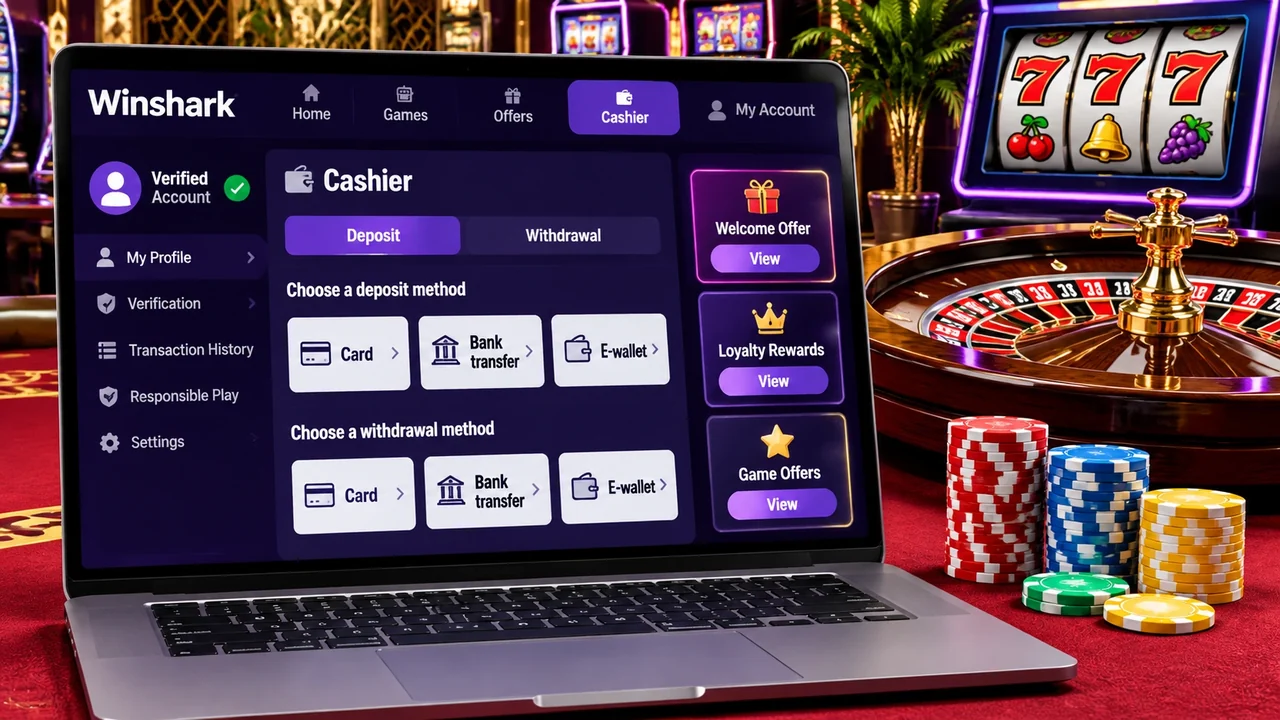
A well-run cashier pays out to a method in your own name, usually the one you deposited with. That ‘closed loop’ rule is irritating when you want flexibility, yet it is the single best protection against a thief emptying your balance to their own account. Identity checks before the first payout serve the same end. They feel like friction and they are also the reason a stolen login is worth less. See identity checks for what is normally requested and how to send documents sensibly.
What to check before depositing: the list of withdrawal methods, not just deposit methods; whether limits and processing stages are written down; and whether the cashier ever asks for more than it needs. No casino needs your online banking password, your card PIN or a one-time code that your bank sent you.
Layer four: are the games what they say they are?
Here the question shifts from theft to honesty. A modern pokie is not stored on the casino's website. The reels you see are served by the game studio's own platform, which runs the random number generator and reports the result back to the casino's wallet. That split is deliberate. It means the operator cannot reach in and nudge a spin.
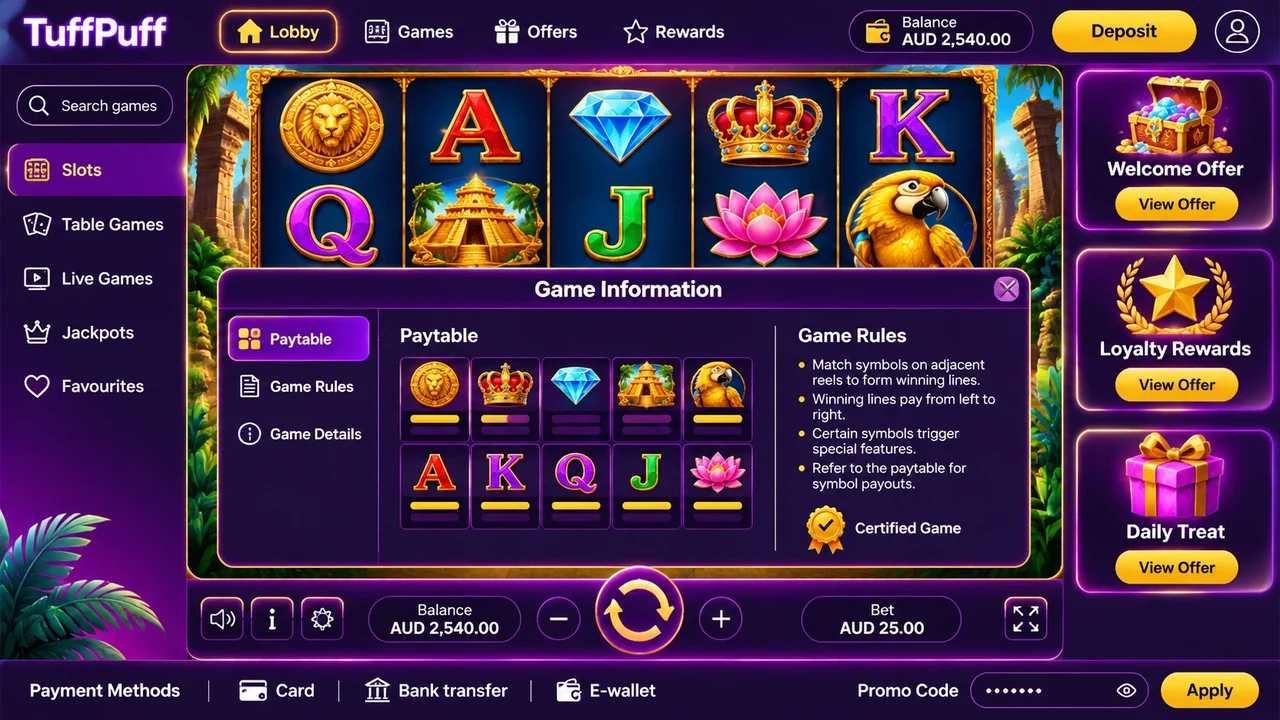
The weak point is counterfeit games: copies of popular titles hosted by the casino itself, with altered maths. They look right and play wrong. You can make a rough check without any tools. Open the game's information or help screen and look for the studio name, a version or build reference and the stated return to player. Compare the studio name with the provider list in the lobby. Established studios also publish their games on their own websites, where a demo should look and behave the same.
Independent test laboratories certify random number generators and game maths for the studios, and some casinos link to a certificate in the footer. A badge image alone proves nothing. A badge that opens a certificate naming the same company and domain you are on proves a little more.
Then there is a legitimate variation that is not a security fault at all: many studios release one game in several RTP settings and the operator picks which to run. The figure in the info screen is the one that applies to you. We explain how to read it on the game fairness page.
Layer five: who is actually running the site
Everything above can be perfect and you can still be left out of pocket if the company declines to pay and there is nobody above it. This is the layer where Australian players need to be most clear-eyed.
Under the Interactive Gambling Act 2001, online casino games such as pokies, roulette and blackjack may not be offered to people in Australia. The law is aimed at operators and advertisers, not at individual players, and the ACMA enforces it. The practical upshot is that any online casino taking Australian sign-ups is based offshore and answers, at most, to a regulator in another country. No Australian regulator or ombudsman will chase a withdrawal for you.
That makes the offshore paper trail worth ten minutes of reading. Look for a named company with a registered address in the footer and in the terms, a licence reference you can look up on the licensing body's own website rather than on an image, and terms that state who you are contracting with. Our licence check guide shows the lookup, and the law explainer sets out what the Act does and does not cover.
Then read the terms for the clauses that decide disputes: dormant account fees, maximum win or withdrawal clauses, ‘irregular play’ wording and the operator's right to close accounts. Vague, sweeping language in those spots is a security problem in the ordinary meaning of the word. Terms red flags lists the phrases we look for.
A 15-minute test for any secure casino online
You can run all of this before registering, in one sitting, with nothing but a browser.
- Type the address yourself or use a bookmark. Check https and tap the lock to view the certificate details.
- Scroll to the footer. Write down the company name, the address and the licence reference.
- Open the licensing body's website in a new tab and search for that company or domain there.
- Open the terms. Search the page for ‘withdraw’, ‘dormant’, ‘maximum’ and ‘irregular’. Read each hit.
- Open the cashier or payments page. Confirm withdrawals are listed with methods, limits and processing stages.
- Open one pokie in demo mode. Find the info screen, the studio name and the RTP line.
- Open live chat. Ask whether two-factor authentication is available and which document types are needed for a first withdrawal. Note how long the answer takes and whether it is specific.
- Search the casino's name together with the word ‘complaint’ and read past the first page of results.
Eight steps, no account, no deposit. If a site clears them, the sensible next move is still a small first deposit and an early test withdrawal rather than a large one. The first withdrawal checklist covers that part.
Signs that override everything else
Some findings end the assessment on the spot, however polished the rest of the site looks.
- Support, or an ‘agent’ on a messaging app, asks you to pay into a personal bank account or a personal PayID.
- You are told to pay a ‘tax’, ‘unlock fee’ or ‘verification deposit’ before a withdrawal can be released. Legitimate fees are deducted from the payout, not requested as a fresh payment.
- Anyone asks for a banking password, a card PIN, or to share your screen while you log in to your bank.
- The site has no terms page, or the terms name no company.
- The games carry famous titles but no studio name in the info screen, and the layout is slightly off.
- The domain you were sent differs from the one in the terms and support cannot explain why.
Most reported casino scams in Australia do not involve a casino at all. They are a cloned lobby with a deposit page attached. The scam check page shows the pattern in more detail.
If something still goes wrong
Speed and records matter more than anger. If you see a login you do not recognise, change the casino password and the email password straight away, end other sessions if the site lets you, and tell support in writing so there is a timestamp. If a payment left your bank and did not arrive, send support the bank receipt and the reference, and ask for a ticket number.
If money has gone to an account you now believe is fraudulent, ring your bank's fraud line immediately. Banks can sometimes stop or recall a recent transfer, and the odds fall with every hour. You can also report the matter to Scamwatch and, where an offshore site is targeting Australians, to the ACMA, which uses such reports when deciding which sites to investigate.
For a plain dispute with a real operator, such as a delayed or refused payout, work up the ladder: support, then a formal complaint to the operator, then the licensing body named in the terms. Keep screenshots of the balance, the withdrawal request and every chat. The steps are laid out on our complaints page.
Where Tower.bet sits in this picture
This site follows one brand, so it is fair to say how the five layers apply to it. We do not hand out a ‘secure’ stamp. What we do is run the same checks described above and record what we could confirm and what we could not, with the date. The safety assessment holds the current findings, and the full review puts them next to games, bonuses and payments.
Use those pages as a worked example rather than a verdict. Domains, cashier methods and terms change, sometimes within weeks, and a check that passed in one month says nothing certain about the next. The method outlasts any single result, and it works on every other casino you might be weighing up.
Online casino play is for adults only: 18+, and never with money you cannot afford to lose.
Secure online casino questions Australians ask
Does the padlock icon mean a casino is safe?
No. It means the connection is encrypted and the certificate matches the domain. A scam site can have a valid certificate too. The padlock tells you nobody is reading the traffic in transit, and nothing about who is at the other end or whether they pay out.
Is PayID a secure way to deposit at an online casino?
The PayID system itself is run through Australian banks and shows you the registered name before you confirm, which is a useful safeguard. The risk sits with the recipient. If the name shown is a private person rather than the business the cashier described, do not send the payment until support has explained it in writing.
Can an Australian regulator help if an offshore casino will not pay?
Not with recovering money. The ACMA enforces the Interactive Gambling Act against operators and can have sites blocked, but it does not resolve individual payout disputes. Your routes are the operator's complaint process and the overseas licensing body named in its terms.
Should I send ID documents to a casino?
Identity checks before withdrawal are standard and they protect your balance from being paid to someone else. Send documents only through the upload page inside your logged-in account, never by a messaging app, and cover details that are not requested, such as the middle digits of a card number.
Are crypto casinos more secure than card or bank deposits?
They are different rather than safer. Crypto avoids sharing card details, but transfers are irreversible and no bank fraud team stands behind them. A mistake in the address or network is permanent, so the account and operator layers matter even more.
How can I tell a real pokie from a fake copy?
Open the game's info screen and look for the studio name, the version details and the RTP line, then compare the game with the demo on the studio's own website. Missing studio details, odd fonts or a game that loads from the casino's own address rather than a provider platform are warning signs.
Your next move
Choose with purpose.
Bring the facts together, set your budget and decide at your own pace. Strong play starts with clear terms, a plan and control of the session.